Documentation Index
Fetch the complete documentation index at: https://docs.polygon.technology/llms.txt
Use this file to discover all available pages before exploring further.
Please view the third-party content disclaimer here.
The Graph lets you index and query smart contract data through APIs called subgraphs. This avoids the need to query an RPC node directly for historical event data.
The Graph supports:
- Polygon Mainnet
- Polygon zkEVM Mainnet
- Polygon Amoy Testnet
- Polygon zkEVM Cardona Testnet
Prerequisites
- A smart contract deployed and verified on a supported Polygon network.
- Node.js installed.
- A Subgraph Studio account with a connected wallet.
Step 1: Initialize your subgraph project
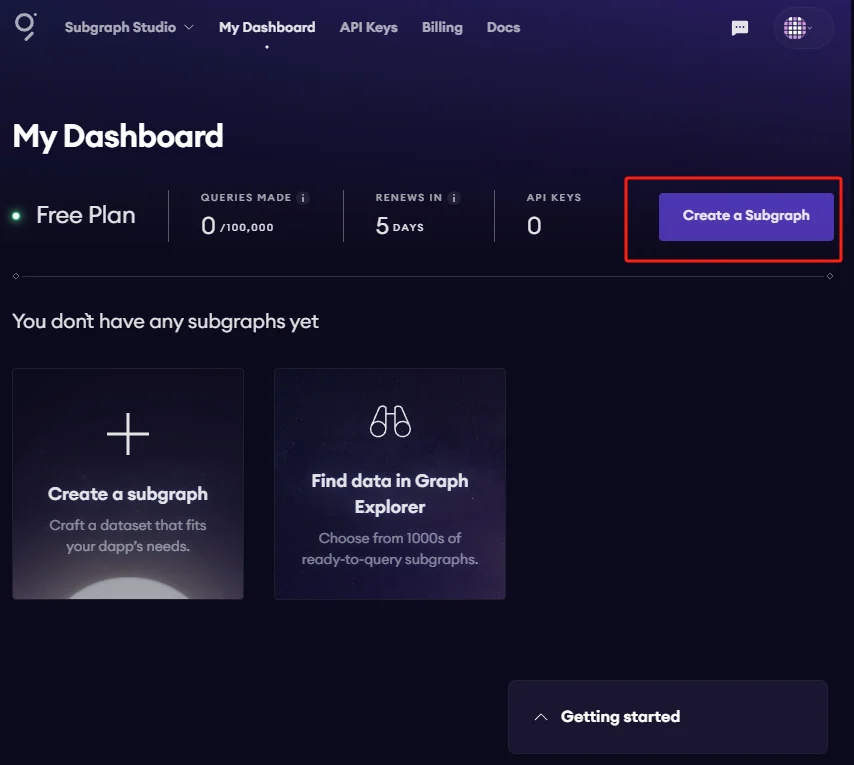
Create a subgraph in Subgraph Studio
Go to Subgraph Studio and connect your wallet. Click Create a Subgraph. Use Title Case for the name, for example: “My Contract Polygon Mainnet”.
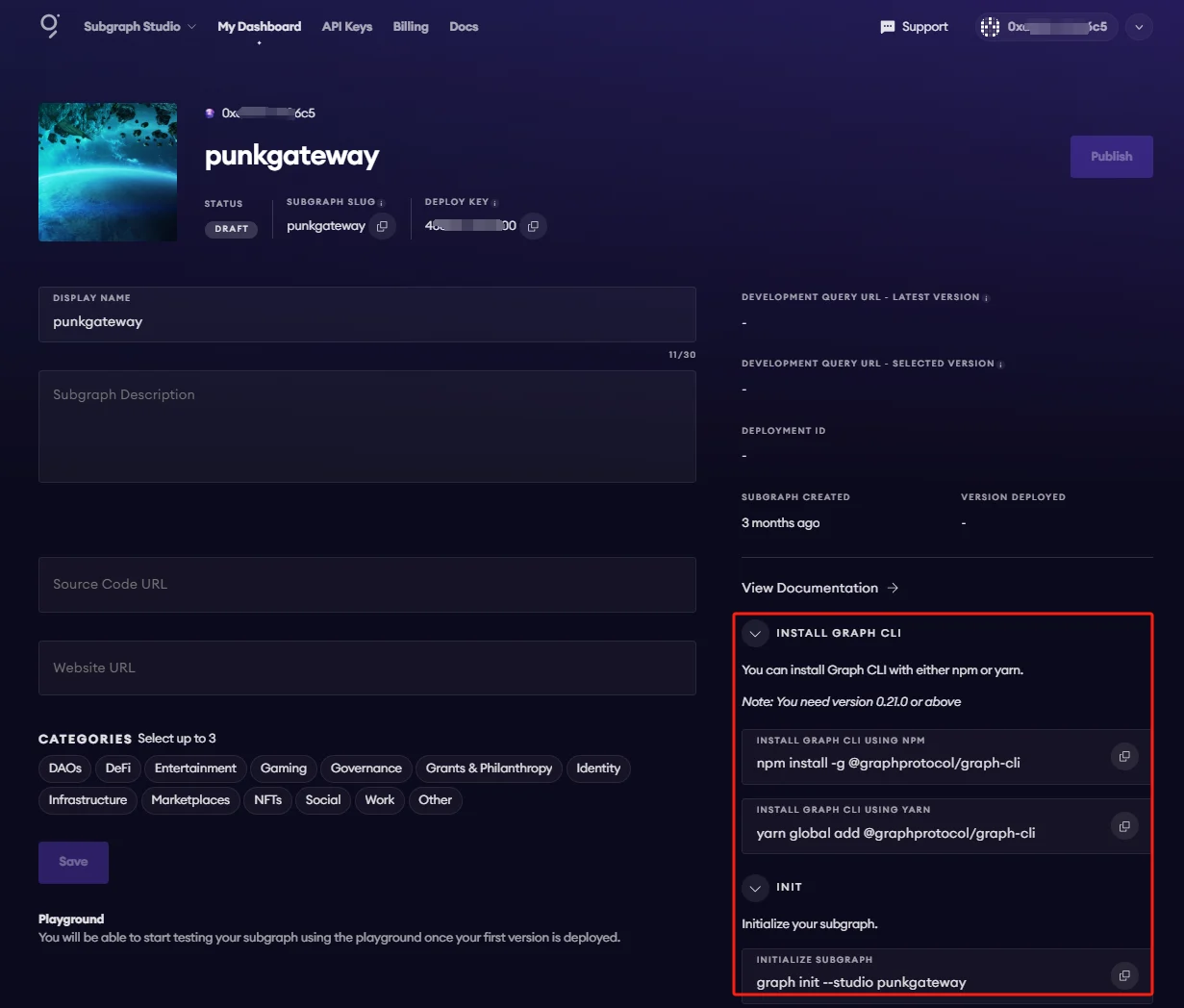
The subgraph page displays the CLI commands you need on the right side:
Install the Graph CLI
npm install -g @graphprotocol/graph-cli
Initialize your subgraph
Copy the command from your subgraph page to include your specific subgraph slug:
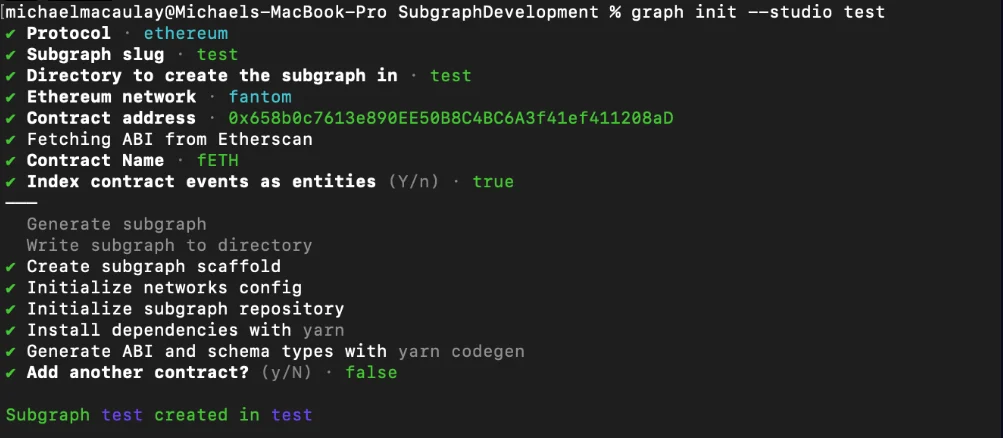
graph init --studio <SUBGRAPH_SLUG>
You will be prompted for details about your subgraph:
If your contract is verified on the block explorer, the CLI fetches the ABI automatically and generates an entity for each event.
Step 2: Deploy and publish
Deploy to Subgraph Studio
Build the subgraph:
$ graph codegen
$ graph build
Authenticate and deploy. Copy these commands from your subgraph page to use your specific deploy key and slug:
$ graph auth --studio <DEPLOY_KEY>
$ graph deploy --studio <SUBGRAPH_SLUG>
Enter a version label when prompted, for example v0.0.1.
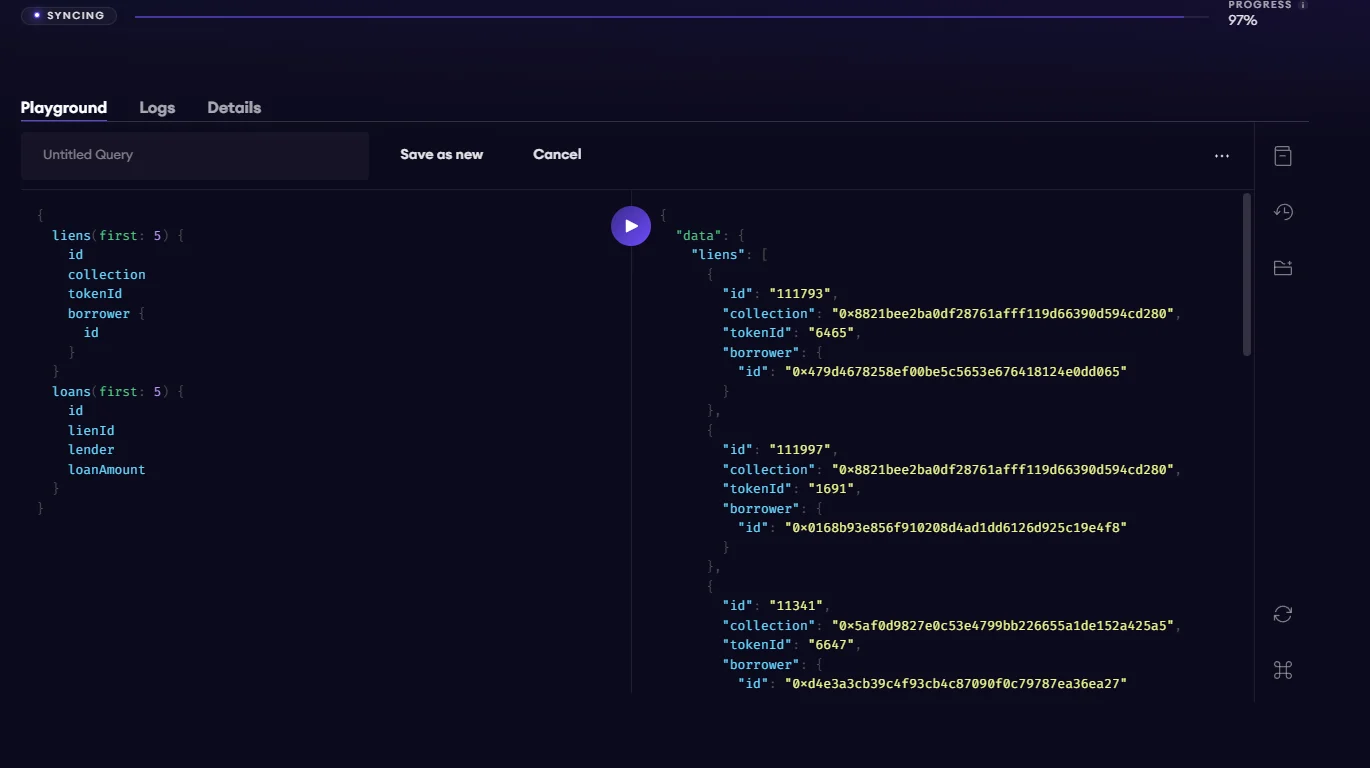
Test your subgraph
Use the playground in Subgraph Studio to run a sample query. The Details tab shows your API endpoint for testing from your dApp.
Publish to the decentralized network
When your subgraph is ready for production, click Publish on the subgraph page in Subgraph Studio:
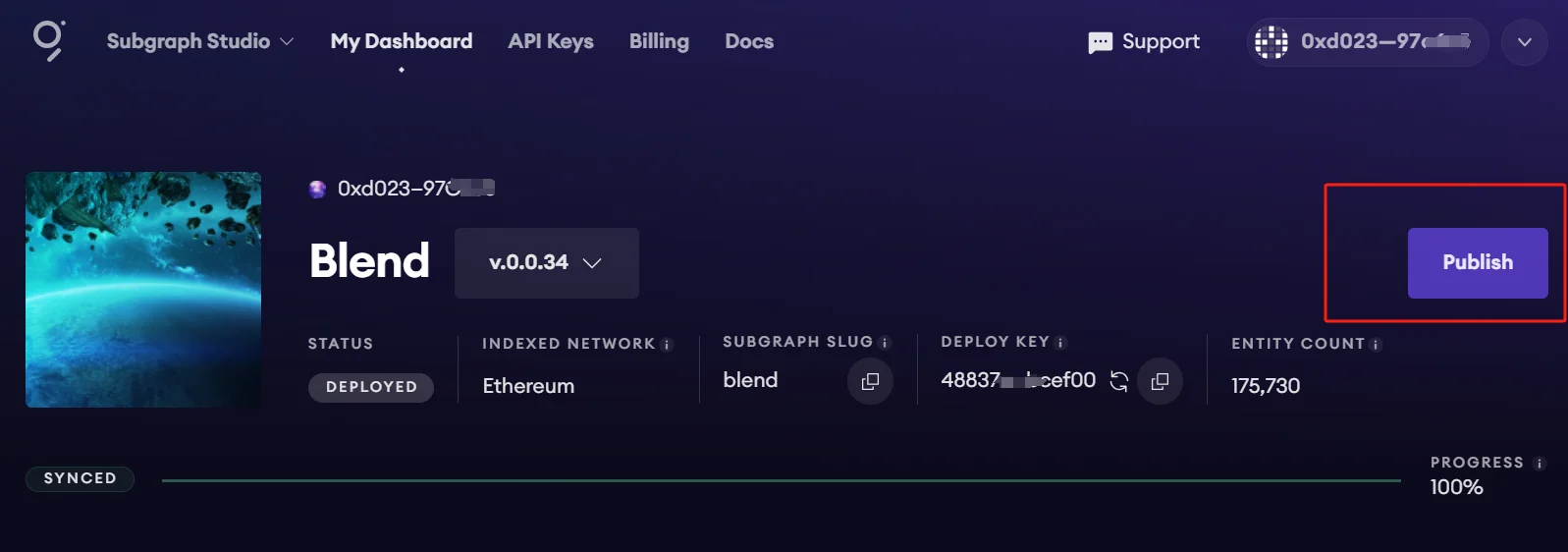
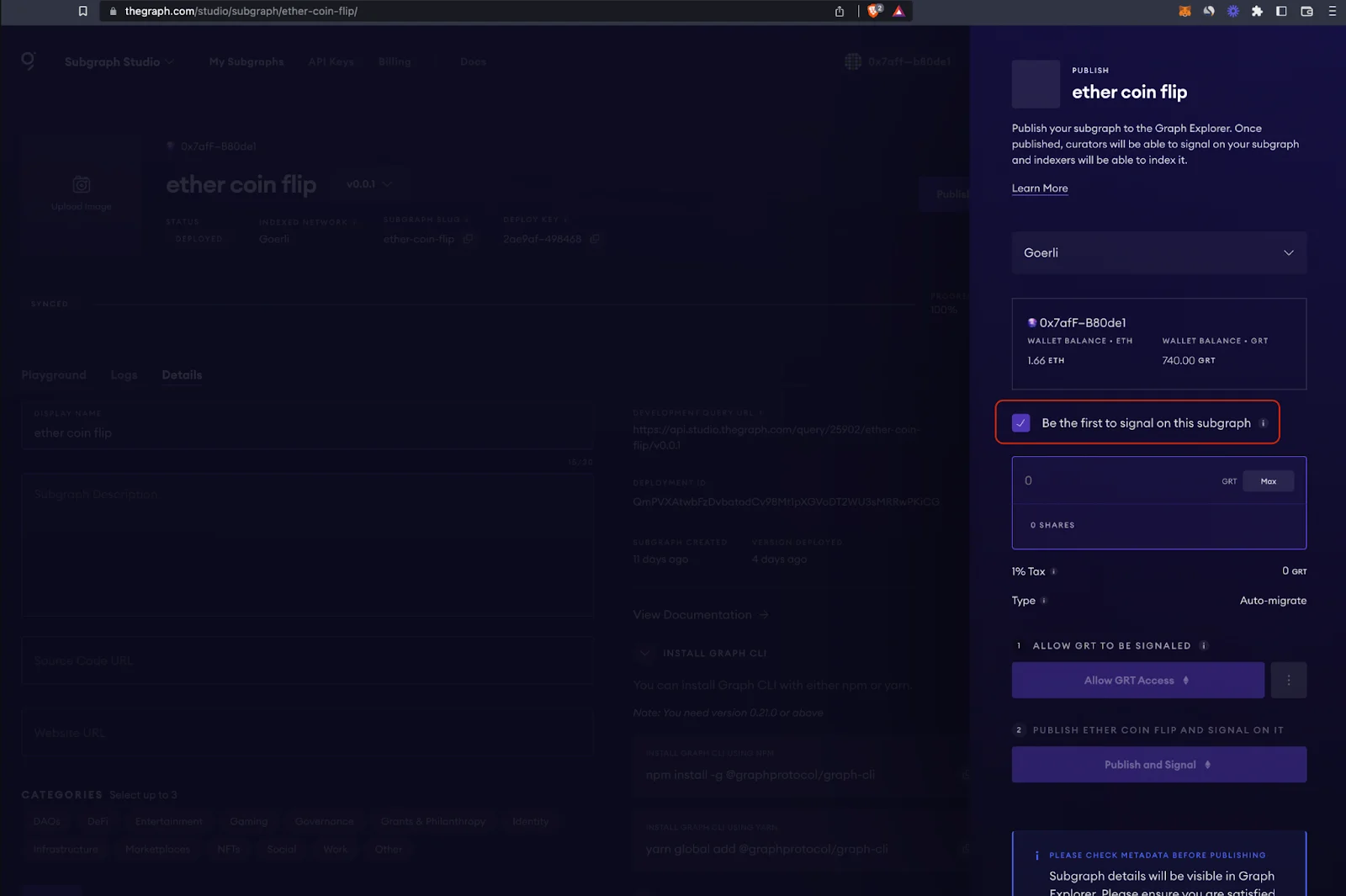
After publishing, indexers must begin serving queries. To speed this up, curate your subgraph with GRT. As of May 2024, curating with at least 3,000 GRT is recommended to ensure the subgraph is indexed and queryable promptly.
Note: The Graph’s smart contracts are on Arbitrum One, even when your subgraph indexes data from Polygon or other supported chains.
Step 3: Query your subgraph
Once published, query your subgraph by sending a GraphQL query to the subgraph’s query URL. Find the URL at the top of the subgraph’s Explorer page.
Example from the CryptoPunks Ethereum subgraph:
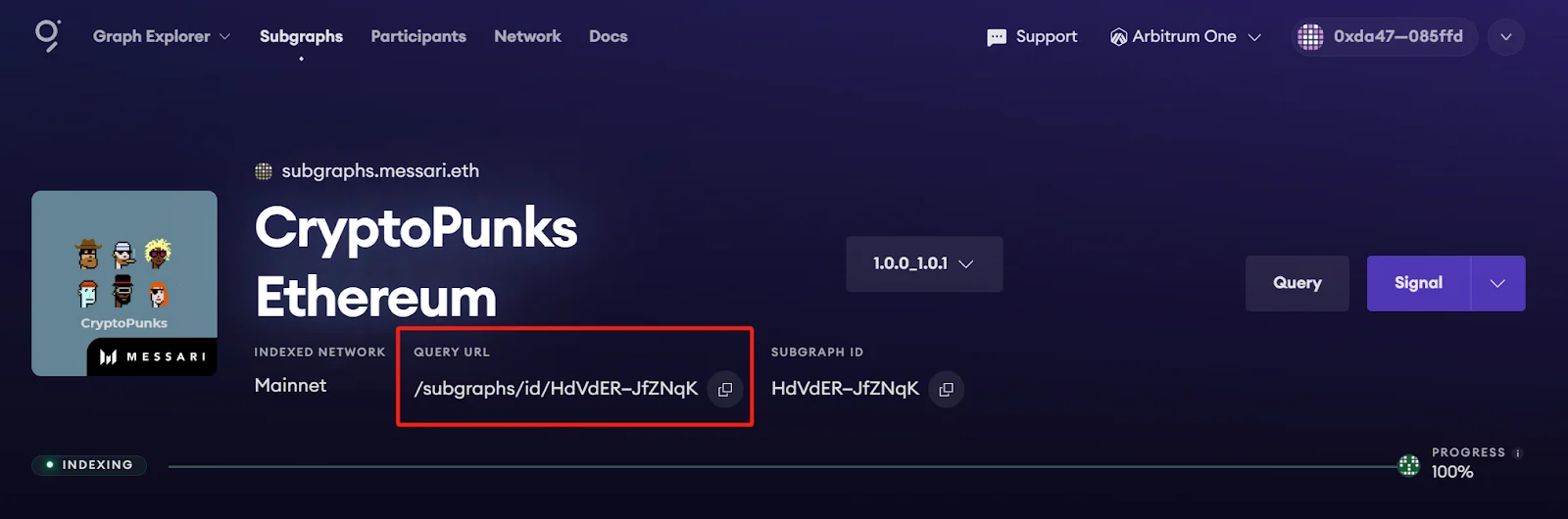
The query URL format is:
https://gateway-arbitrum.network.thegraph.com/api/[api-key]/subgraphs/id/HdVdERFUe8h61vm2fDyycgxjsde5PbB832NHgJfZNqK
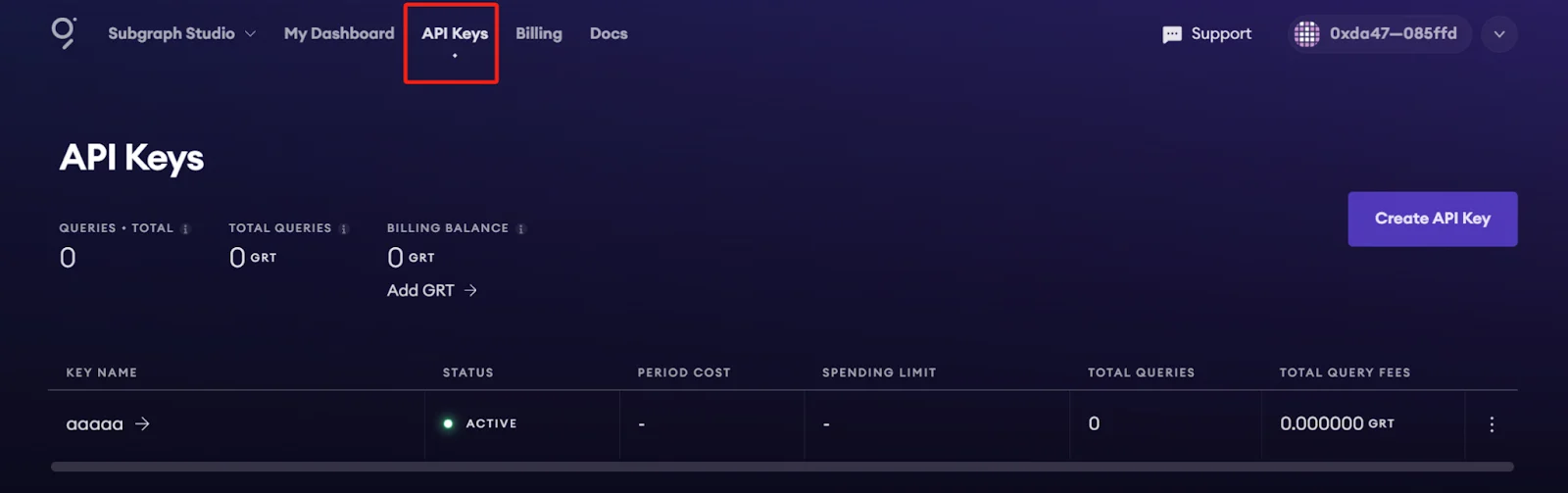
Get an API key
In Subgraph Studio, open the API Keys menu at the top of the page to create an API key.
Appendix
Sample query
This query returns the most expensive CryptoPunks sold, ordered by price:
{
trades(orderBy: priceETH, orderDirection: desc) {
priceETH
tokenId
}
}
Response:
{
"data": {
"trades": [
{
"priceETH": "124457.067524886018255505",
"tokenId": "9998"
},
{
"priceETH": "8000",
"tokenId": "5822"
},
// ...
Sample code
const axios = require('axios');
const graphqlQuery = `{
trades(orderBy: priceETH, orderDirection: desc) {
priceETH
tokenId
}
}`;
const queryUrl = 'https://gateway-arbitrum.network.thegraph.com/api/[api-key]/subgraphs/id/HdVdERFUe8h61vm2fDyycHgxjsde5PbB832NHgJfZNqK'
const graphQLRequest = {
method: 'post',
url: queryUrl,
data: {
query: graphqlQuery,
},
};
// Send the GraphQL query
axios(graphQLRequest)
.then((response) => {
// Handle the response here
const data = response.data.data
console.log(data)
})
.catch((error) => {
// Handle any errors
console.error(error);
});
Additional resources